Medical adhesive-related skin injury: Prevalence, risk factors, prevention and mitigation. A systematised literature review
Received:
Accepted:
Published:
Authors: Karen Ousey, Charmaine Childs, Sara Carvalhal, Chris Edelman, Daniel Chaverri Fierro, Christopher Gee, Sanna Kouhia, Rhidian Morgan-Jones, Mohamed Muath Adi, Harikrishna KR Nair, Thomas W Wainwright
Citation: Ousey K et al, (2026) Medical adhesive-related skin injury: Prevalence, risk factors, prevention and mitigation. A systematised literature review. Global Wound Care Journal 2 (2): 18-27.
Conflict of interest: This review was undertaken following development of a consensus document supported by Mölnlycke. Mölnlycke had no role in the development of this review, interpretation of evidence or manuscript preparation. KO and CC are on the journal editorial board.
Corresponding author: Karen Ousey k.j.ousey@hud.ac.uk
DOI: 10.63896/gwcj.2.2.18
Background: Medical adhesives are widely used, and have an invaluable role in securing medical devices and management of wounds. However, medical adhesive-related skin injuries (MARSI) are a common occurrence and adversely affect patient and provider outcomes.
Methods: A systemised review of empirical literature relating to MARSI was undertaken (timespan 2015–2026; all ages; all study designs; all geographic locations). Structured searches of CINAHL Ultimate, Cochrane Library including CENTRAL and PubMed were undertaken between October 2025 and January 2026. Studies were screened for eligibility, using the PRISMA methodology, following defined inclusion and exclusion criteria. Narrative synthesis was undertaken.
Results: After screening, 45 eligible studies remained, 25 addressing MARSI prevalence and risk factors and 20 relating to MARSI prevention and mitigation; marked heterogeneity precluded meta-analysis. There was wide geographic variation, with low- and middle-income countries under-represented. Studies were conducted in a wide range of settings and clinical specialisms, particularly high-dependency and critical care; only one study involved primary and long-term care facility settings. MARSI prevalence was generally high (median 28.0%, range 0.85–70.21%) and influenced by factors such as adhesive type, dressing duration and patient condition. Fifteen prevention and mitigation studies were trials; 11/15 addressed adhesive tapes, dressing and securement products. Silicone-based products generally demonstrated lower MARSI incidence. Risk-stratified assessments and standardised skin care protocols demonstrated benefits. Limitations of the evidence reviewed included generally small sample sizes; preponderance of single-site studies; lack of consistency in definitions, assessments and outcomes; and limited adoption of relevant methodological guidelines.
Conclusion: Findings reaffirm MARSI as a common and clinically significant complication. Patient vulnerability, clinical context and adhesive/product type influence prevalence. Silicone-based adhesives may be an appropriate first-line option for frail and vulnerable patients. Risk-stratified care pathways show promise. Proactive steps are required to minimise adhesive use, where feasible, and manage risk where not. High-quality, multicentre studies are needed, as is standardisation in studies. There is a dearth of MARSI research in low- and middle-income countries and in primary care/long-term care facilities.
Medical adhesives, used to secure dressings and devices, are commonly used in a wide range of health and care settings (McNichol et al, 2013; Collier, 2020; Fumarola et al, 2020; Barton et al, 2024). They have wide clinical utility, being used in:
- Securing medical devices (such as endotracheal tubes, indwelling urinary catheters, peripherally inserted central catheters [PICCs], IV cannulae, ostomy pouches and monitoring devices, such as electocardiogram electrodes) and nicotine and HRT patches and HRT patches.
- Management of wounds (including wound dressings and topical skin adhesives; Kus and Ruiz, 2020; Bal-Ozurk et al, 2021).
There has been recent rapid expansion in the use of medical adhesives to attach wearable devices that require long-term use and secure adhesion, such as for continuous glucose monitoring (both in diabetes and patients using GLP 1 medication) and cardiac telemetry (Tarar et al, 2020; Zhou et al, 2024).
There are two primary categories of medical adhesives: preformed adhesives and in situ forming glues (Fialho et al, 2024).
- Preformed adhesives: These include pressure-sensitive adhesives (PSAs) commonly found in surgical tapes, dressings, and ostomy supplies. PSAs are typically composed of acrylates, silicones or polyurethanes, and require only light pressure to form a bond with the skin.
- In situ forming adhesives (also known as tissue glues). These include cyanoacrylates and fibrin glues, and are used as alternatives to sutures and staples for wound closure.
Despite their widespread usage and undoubted usefulness, medical adhesives are frequently associated with significant clinical complications, typically arising from disruption of skin integrity or adverse reactions (McNichol et al, 2013; Collier 2020; Fumarola et al, 2020; Barton et al, 2024). These include:
- Mechanical Injuries: The most prevalent forms are redness or erythema, skin stripping, tension blisters and skin tears (McNichol and Bianchi, 2016).
- Dermatitis and Irritation: Patients may experience irritant contact dermatitis or allergic reactions to chemical components in medical adhesives, such as acrylates (McNichol and Bianchi, 2016).
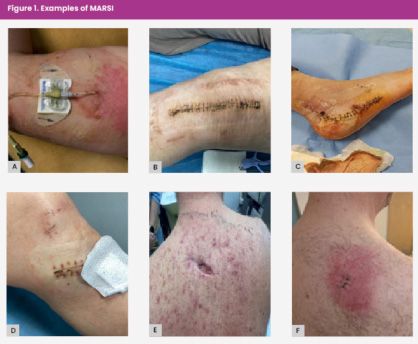
Collectively, such injuries are often referred to as medical adhesive-related skin injury or MARSI. A consensus summit held in 2012, which brought together 23 experts, yielded the seminal definition of MARSI as: ‘occurrence of erythema and/or other manifestations of cutaneous abnormality, (including, but not limited to, vesicle, bulla, erosion or tearing), which persists 30 minutes or more after removing the adhesive’ (McNichol et al, 2013).
Figure 1 demonstrates examples of MARSI.
MARSI is commonly occurring, but often under-recognised and under-reported. It is particularly common and problematic in vulnerable populations, including those at extremes of age and living with frailty (McNichol et al, 2013; Collier 2020; Fumarola et al, 2020; Barton et al, 2024).
MARSI is an important clinical challenge, as it is associated with impaired quality of life, pain, distress for patients and for health and care providers resulting in reduced satisfaction, increased length of stay and greater costs (McNichol et al, 2013; Collier 2020; Fumarola et al, 2020; Barton et al, 2024). MARSI can lead to an increase in wound size due to stripping of the epidermal layer and delayed healing, while repeated adhesive use and associated skin damage may compromise skin integrity, making the secure placement of subsequent devices or dressings increasingly challenging.
Improved understanding of risks, prevalence, prevention and mitigation of MARSI is therefore required, and these are the focus of this literature review.
Design and methods
Review design
This was a systematised review (as described by Grant and Booth, 2009). This approach was chosen as it entails a systematic approach to searching and synthesising the literature, but has fewer constraints than a systematic review. There is no requirement in a systematised review for formal critical appraisal of articles using a scoring tool; this was appropriate for the current review, as none of the articles considered was rejected on the basis of quality. However, quality of papers, including use of relevant methodological guidelines or checklists, was taken into consideration when drawing conclusions and making recommendations. The appropriateness of undertaking meta-analysis was considered once the final list of studies was identified.
Review questions
This review sought to address the following questions:
- What is the prevalence of MARSI in different clinical populations?
- What risk factors are associated with development of MARSI?
- What strategies are employed to prevent and mitigate MARSI, and what is the efficacy of these?
Inclusion and exclusion criteria
Only studies reporting empirical research were included, with all study designs being eligible for inclusion. Papers were required to be either written in English or able to be machine-translated. Only articles for which full text could be retrieved were included.
The following were excluded:
- Literature reviews and evidence syntheses.
- Study/trial protocols.
- Conference abstracts.
- Trial registration records.
- Corrigenda.
- Journal letters.
- Editorials.
- Animal studies.
- Case studies, case reports and case series.
- Consensus papers.
- Continuing professional development articles.
- Product reviews.
- Quality improvement projects.
Screening of articles was primarily undertaken by one person, with a second reviewer independently assessing a random selection of 10% of papers, to quality assure selection; there were no disagreements between the assessors regarding papers included in and excluded from the review.
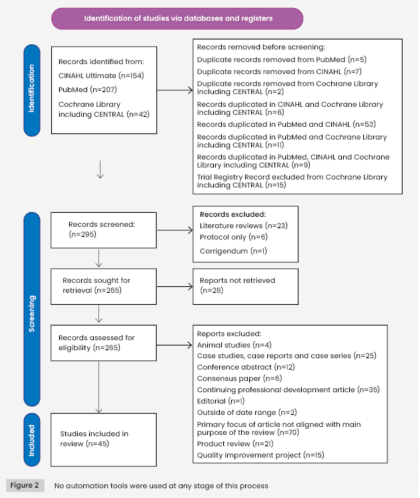
Initial screening was undertaken on title and abstract only. Full-text copies of the articles remaining after this process were sought; however, not all could be retrieved [Figure 2].
Search strategy
Searches were undertaken between October 2025 and January 2026. The databases searched were PubMed, CINAHL Ultimate and the Cochrane Library (including CENTRAL); these were chosen as they are well-respected and highly relevant to healthcare.
The search combination, devised with input from an information specialist, was:
- ( (MH “Adhesives”) OR “medical adhesive-related skin injury” OR “medical adhesive*” OR “skin adhesive*” OR “adhesive dressing*” OR “securement device*” OR MARSI); AND
- ( (MH “Impaired Skin Integrity (NANDA)”) OR “skin integrity” OR “epidermal health” OR “skin health” OR “epidermal damage” OR “skin damage” OR “epidermal breakdown” OR “skin breakdown” OR “skin injury” OR “adhesive skin injury” OR “skin trauma”).
The same search combination was used for all three databases.
Searches were limited to 2015–2026, which ensured that outdated practices were not included and that articles post-dated the seminal consensus summit on MARSI (McNichol et al, 2013). No limits were placed on the age of study participants, in recognition that MARSI affects individuals of all ages. Likewise, no geographic or regional limits were placed on the searches, reflecting that MARSI is a global problem in health and care.
Data synthesis
Narrative synthesis was undertaken. Meta-analysis was considered, but was not possible, owing to the heterogeneity of study designs and methods used.
Results
The searches yielded 403 articles from the three databases. The PRISMA diagram shown in Figure 2 outlines the article screening process (Page et al, 2021).
After screening and exclusion, 45 papers were included in the review, summarised in Supplementary Table 1. Meta-analysis was not deemed appropriate owing to the heterogeneity of the studies retrieved.
There was a wide geographical spread of papers, including South and East Asia, North and South America, Europe and the Middle East. Low- and middle-income countries were under-represented and there were no papers from Africa. A sizeable number of the papers emanated from China (n=14), with Brazil being the next most-represented country (n=8).
Studies were undertaken in a range of clinical settings. Paediatric/neonatal settings, mainly high dependency/critical care, were highly represented (n=12), as were high dependency/critical care adult settings (cancer n=10; adult intensive/critical care n=5). A sizeable number of studies (n=10) were undertaken in surgical (including operating theatre) settings. Other studies (n=6) were conducted in a variety of hospital and clinic settings, including outpatients and across a range of disciplines, with one of these involving healthy volunteers (Grove et al, 2023) and one focusing on staff (Wei et al, 2023). Only one of the studies was undertaken in a primary care/long-term care facility setting (Chamorro et al, 2019).
All studies addressed research ethics and governance issues, with the majority indicating that formal approval ethics and governance approval for the study had been provided, mainly from an institutional review board.
The papers fell broadly into two groups – those which considered prevalence of and risk factors for MARSI (n=25), summarised in Supplementary Table 2, and those which addressed MARSI prevention and mitigation, both through use of different products/interventions and by addressing wound care practices (n=20), summarised in Supplementary Table 3.
Supplementary Table 2 contains the findings from the studies which addressed prevalence and risk factors. Most of the studies (15/25) were conducted in one unit within a single site, although there were some multicentre studies and two international studies - one conducted in two countries, Australia and New Zealand (Mishra et al, 2021) and one global (Jani et al, 2023). Sample sizes ranged from 30 to more than 8,000 patients, although most were small (median 143). The median duration of data collection was 6 months, ranging from 1 day (point prevalence study) to 30 months.
MARSI prevalence was common, particularly in high-dependency settings, reflecting the frailty of patients and the higher usage of medical devices requiring securing in such settings. Median MARSI prevalence across the studies which reported this was 28.0% (range 0.85–70.21%). Studies demonstrated high MARSI prevalence in ICU and hospital settings, with rates ranging from 19.5% to 42%, influenced by factors such as adhesive type, device duration, and patient condition. Cancer patients had MARSI prevalence around 29.83–32%, with risk factors including age, skin condition, and specific treatments. Prevalence in patients with a PICC ranged from 11.6% to 32%. Prevalence in neonates and children was particularly high – up to 61.1% in paediatric ICU patients and 70.21% in preterm neonates.
A range of study designs was employed to identify prevalence and risk, with prospective and retrospective observational studies being most common; in some instances, it was hard to determine the study design, as terminology used within the paper varied. Across the studies, there was wide variability in how risk and prevalence were assessed. This included variations in data collected to assess risk, whether an established risk assessment tool was used, or not and how prevalence was defined and recorded. Many of the studies used a bespoke data collection/case reporting tool or questionnaire designed for the study; questionnaires in the cross-sectional surveys had undergone little or no validation. All studies had at least an operational definition of MARSI, with many drawing upon the literature to inform how MARSI was defined. There was a degree of consistency in the definition of MARSI, with McNichol et al’s (2013) definition being commonly used.
The typically small sample sizes, generally short duration of data collection, preponderance of single site studies and variability in methods used to collect, analyse and report data were notable limitations of the body of work reviewed. Additionally, few of the studies reported having drawn upon recognised guidance pertinent to the study design, such as STROBE (https://www.equator-network.org/reporting-guidelines/strobe), notable exceptions being Pio et al (2025) and Pires-Júnior et al (2021). Most data collection tools/proformas and questionnaires were bespoke and developed for the study by the project team. Questionnaires had undergone limited or no testing/validation; in some instances, this was appropriate, as the intention was not to create a validated tool for wider use. In some instances, conclusions did not directly arise from the findings (e.g. some authors concluded that further education or preventive care planning would yield benefits, although this was not the focus of their research).
Supplementary Table 3 summarises data from the group of studies which related to prevention and mitigation of MARSI. Most of the studies (15/20) were trials, the majority of which were randomised controlled trials; only two of the trials, Cirik et al (2024) and Xue et al (2024) mentioned use of a trial guideline, such as CONSORT (Hopewell et al, 2025). Other study designs were two prospective observational studies (Degenhardt et al, 2024; Zhang et al, 2025); one scoping review with Delphi (Rabelo et al, 2022); one cross-sectional survey (Wu et al, 2023) and one case control study (Zhao et al, 2022).
Eleven of the trials indicated that blinding had taken place, of which four involved blinding of assessors only (Chamorro et al, 2019; Kleidon et al, 2020; Jiang and Yin 2024; Xue e al 2024); one of assessors and the trial statistician (Cirik et al, 2025); one the trial statistician only (Sahin et al, 2024); three patients and assessors (Zeng et al, 2016; Bahadori et al, 2022; de Paula et al, 2024) and two patients only (Rouhani et al, 2023, 2024). The remaining studies were either unblinded or did not specify whether blinding took place. In some instances blinding, especially of patients and clinicians, would have been difficult or impossible, owing to the nature of the intervention.
The majority of the studies addressed adhesive tapes, dressings and securement products (n=11), with other topics being device securement approaches (n=3); skin protection and adhesive removal products (n=2); clinical protocols, bundles or risk-stratification approaches (n=2); patient positioning (n=1) and nurses’ MARSI-related knowledge, attitudes and behaviours (n=1).
Most of the studies (n=15) were single-site, usually a single hospital or department within a hospital or in a clinic/out-patient setting. Only one study (Chamorro et al, 2019) was undertaken in primary care centres (n=29) and long-term care facilities (n=10); this was also one of the few multicentre studies. Degenhardt et al (2024) recruited participants from three sites (one in-patient geriatric ward; one ambulant dermatology clinic and one ambulant orthopaedic clinic) in the same region with the primary objective to assess the percentage of adhered dressing area 7 days following dressing application percentage of adhered dressing area 7 days after dressing application. The two studies by Rouhani et al (2023, 2024) did not specify a study site and patients (who were undergoing a range of cosmetic surgery procedures) may have been drawn from multiple centres. None of the studies was multinational.
Sample sizes were generally small, ranging from 18 to 412 (median 117). Although most of the studies provided information about how the target sample size was determined, including use of a power calculation, this was not always the case and, furthermore, some studies failed to reach their target sample size, resulting in them being underpowered, e.g. Chamorro et al (2019) had a target of 419 per arm; actual sample size was 169 total.
In trials comparing different adhesives and dressing types, silicone-based products generally (although not in all studies) demonstrated lower MARSI incidence and related reductions in patient discomfort, erythema and skin-stripping than comparators. An experimental silk-fibroin dressing demonstrated promise, yielding better patient outcomes than comparators (SteriStrips and the Dermabond Prineo skin closure system, Rouhani et al [2023, 2024]). In a single study, a skin barrier film used under standard dressings did not yield superior MARSI outcomes with both being equivalent (Cole et al, 2020). A single study found that pressure dressings secured with silk tape produced markedly worse MARSI outcomes than non-pressure dressings with foam adhesive over gauze (Xue et al, 2024). One study found that nursing patients with a chest wall implantable port in a semi-recumbent position resulted in better MARSI outcomes than nursing patients supine (Jiang and Yin 2024).
Three studies explored the use of risk stratified or standardised skin care protocols, with findings from all pointing to these as being beneficial. (Rabelo et al, 2022; Zhao et al, 2022; Zhang et al, 2025) These findings echoed calls in some of the risk and prevalence studies for development of risk assessment tools (e.g. Altamimi et al, 2024).
Across studies, there was considerable variability in how MARSI was defined and assessed, including variation in patient-reported outcomes.
McNichol et al.’s (2013) definition was widely adopted, with more recent definitions by de Paula et al (2024), Ferraz-Torres et al (2024) and Xiao et al (2024) largely aligning with it. These descriptions consistently reference features such as erythema, redness, blisters and tears, and emphasise that these signs persist for at least 30 minutes following adhesive removal [Supplementary Table 3 ]. Some studies used validated tools, such as Lund and Osborne’s (2004) Neonatal Skin Condition Score (used by Cirik et al [2025] and Sahin et al [2024]). However, most relied on bespoke pro formas or questionnaires developed for the study or used or simple yes/no scoring. Across the studies, a common practice was for photographs of injuries to be taken (e.g. by a clinician), from which assessors then made their judgement re presence and severity of MARSI. Time points for assessment ranged widely (30 minutes to 8 hours post adhesive removal). Skin injury categories were often grouped differently, making cross study comparison challenging.
The strength of the evidence in these papers is limited by a number of factors, including generally small sample sizes and lack of adequate statistical power; lack of multicentre studies and lack of consistency in definitions and assessments. There was considerable variation in the interventions, and several of the investigational products used were experimental, locally developed or adapted. Most of the studies focused on highly specific populations, limiting generalisability of findings beyond these.
Discussion
This systematised review synthesised contemporary evidence relating to the prevalence, risk factors, prevention and mitigation of MARSI. The review included a total of 45 studies, published between 2015 and 2026. These spanned diverse clinical settings, populations, and geographical regions. The body of evidence was heterogeneous in design, outcomes measured, and methods of MARSI identification, which precluded meta-analysis.
Nevertheless, there were some common threads relating to the burden, contributors to and prevention of MARSI across a range of healthcare settings.
Across prevalence and risk factor studies, MARSI was consistently shown to be a common and clinically significant complication, with median prevalence around 28%, rising to more than 60% in neonatal and paediatric intensive care settings. Prevalence was associated with a range of factors, including patient vulnerability, clinical context and adhesive/product type.
The prevention and mitigation studies, the majority of which were randomised controlled trials, demonstrated that silicone based adhesives and dressings generally produced lower MARSI incidence than acrylate based alternatives, although this was not universal. Novel biomaterials, specifically silk fibroin dressings showed promise, but require additional, larger-scale studies. Findings suggest benefits from risk stratified skin care protocols and proactive skin assessment strategies; again, further research is needed to confirm these findings.
In Cole et al’s (2020) study, use of a barrier film did not show benefit, which was interesting as these are recommended in clinical guidance documents and consensus statements (e.g. McNichol et al, 2013; McNichol and Bianchi 2016); however, this finding must be interpreted with considerable caution, having arisen in only one unblinded and relatively small-scale study. The included studies consistently emphasised the need for appropriate adhesive selection, careful removal techniques, routine skin assessment, minimising device related tension forces and staff training to mitigate MARSI risk, although these conclusions were sometimes speculative.
Many of the studies focused on high dependency settings and frail or vulnerable individuals. Given the high levels of dependency found in care homes/long-term care facilities (Kojima, 2015) and the widespread use of medical adhesives in primary care settings (Holloway and Downie 2026), the paucity of studies in these settings is a notable gap in current knowledge. The lack of studies in low- and middle-income countries highlights a need for further understanding of the scale and scope of the problem, along with skin management approaches, in such settings.
The current review confirms the ongoing relevance of the seminal definition of MARSI by McNichol et al (2013), with many of the risk and prevalence studies directly adopting or adapting it. Although there was some consistency in the definition of MARSI used in the risk and prevalence studies, this was not the case for the studies focused on prevention and mitigation of MARSI; this is an issue which needs to be addressed in future research, in order to facilitate comparison of outcomes across studies.
Findings from several of the studies included reinforce conclusions and recommendations in consensus documents (such as Barton et al [2024] and McNichol et al [2013]), including the importance of standardised skin assessment tools; the need for device- and patient-specific risk appraisal; the need for careful adhesive selection, particularly silicone for high risk patients; careful adhesive/dressing application and removal techniques and staff education and competency development.
Across the studies, there was little consistency regarding measurement tools used. Interestingly, no consensus was reached among panellists in Barton et al’s (2024) consensus work regarding the need for a validated risk assessment tool for MARSI. This suggests a potential area for further research.
This review extends current knowledge through its inclusion of recent randomised controlled trials, multicentre studies and global neonatal datasets not covered by earlier reviews. The review includes evidence on specific device types (e.g. PICCs, urinary catheters, pulse oximetry sensors) and intervention modalities. It also incorporates emerging technologies, such as silk fibroin biomaterials. Review articles relating to MARSI often focus on a single population or setting, e.g. Behr et al (2020), Li et al (2024) and Shi et al (2025). The current review considered a range of populations and settings, and identified commonalities across these. Limitations of the review are that it was a systematised, rather than systematic, review, hence did include assessment of such issues as risk of bias. Some eligible articles could not be included as full-text could not be retrieved. A further limitation is that only narrative synthesis of findings could be undertaken, owing to the heterogeneity of the studies included in the review.
Conclusion
While recognising the impact of limitations of the studies reviewed on the strength of the evidence within them, the following conclusions can be drawn:
- MARSI remains a prevalent and under-recognised, but potentially preventable, source of iatrogenic injury across a wide range of clinical settings.
- High-risk populations, including critically ill adults, people with cancer, neonates (especially very pre-term neonates) and children, are at particularly high risk for development of MARSI, indicating a need for especial vigilance in both monitoring and management practices.
- Patient vulnerability, device characteristics and adhesive properties all contribute to MARSI risk, requiring recognition of both the individual contributions and interaction of these.
- Inconsistencies in MARSI definitions, assessment points and measurement tools limit cross-study comparability, generalisability of findings and ability to undertake evidence synthesis, thereby hampering development of knowledge in the field.
- Silicone-based adhesives and dressings generally outperform traditional acrylate based products, particularly for vulnerable patients.
- Risk-stratified protocols and routine skin assessment could play a valuable role in MARSI prevention.
- Staff training is often recommended as a core preventative strategy, but further evidence of its effectiveness is required.
Recommendations for clinical practice
Related to the conclusions above, recommendations for practice are:
- Adoption of recognised definitions of MARSI, e.g. McNichol et al (2013), within and across clinical settings, in order to enhance consistency in MARSI identification and reporting.
- Routine use of structured skin assessment protocols, tailored to risk level.
Adoption of risk stratified care pathways, incorporating such factors as age, BMI, skin condition, allergy and prior MARSI history, treatment type and anatomical site. - Taking of proactive steps to minimise adhesive use, where feasible and, where use is essential, to reduce risk of harm (e.g. consideration of duration of use, frequency of dressing change, patient positioning).
- Consideration of use of silicone adhesives as a first line option for frail and vulnerable patients, while recognising that cost, availability and device requirements may affect this.
Recommendations for future research
This review has highlighted issues which need to be addressed to enhance future research, as well as some important gaps in current knowledge. Research recommendations are:
Standardisation of MARSI definitions, e.g. after McNichol et al (2013), and use of validated assessment tools appropriate to the clinical population is essential to allow cross study comparison and support robust evidence synthesis, including through meta-analysis.
There is an urgent need for large, multicentre, adequately powered randomised controlled trials evaluating adhesive types, securement methods, removal agents and skin protection systems across diverse patient groups.
There is a need for prevalence and risk studies that explore outcomes over a longer duration.
Further research is needed to assess the potential contribution of novel technologies, such as bio-materials.
Implementation science studies which examine how best practice can be embedded into routine care, and the cost effectiveness of doing so, are needed.
More emphasis needs to be placed on MARSI in primary care and care homes/long term care facilities, as well as in low and middle-income countries, especially in Africa.
There is potential for MARSI associated with emerging at-risk groups, particularly individuals using adhesive-based devices such as wearable patches and glucose monitors. These will require consideration with further evaluation of their susceptibility and any implications for prevention and management strategies.
Acknowledgements
The authors acknowledge the support of Becky Whyley-Smith, Subject Librarian at the University of Huddersfield, in refining the search strategy, and Ann Caress for her contribution to the development of the manuscript.