Prevalence of oedema and lower-limb wounds in nursing and residential care homes: A point-prevalence study in a UK Integrated Care System
Received:
Accepted:
Published:
Authors: Kate Shirlow, John Stephenson, Leanne Atkin
Conflicts of interest:
Leanne Atkin is on the editorial board of the Global Wound Care Journal. The other authors declare no conflicts of interest.
Acknowledgements:
We are grateful for the assistance of Jo Dumville, Professor of Applied Health Research, Division of Nursing, Midwifery and Social Work, University of Manchester, who provided comments on an early draft of this work. The authors also thank the Vascular Nurse Specialist team (Clare Barker, Donna Slater, Katie Harrison, Amy Spendler and Victoria Reddington at Mid Yorks NHS Trust for assisting with data collection.
Funding:
Supported by an internal Research Capacity Building Pump-Priming award (2024/25).
Corresponding author:
Leanne Atkin, Vascular Nurse Consultant/Associate Professor, Mid Yorks NHS Trust/University of Huddersfield, Pinderfields Hospital, Wakefield WF1 4DH, UK
Leanne.atkin1@nhs.net
Background: Lower-limb oedema is a common in older adults and is associated with increased risk of developing lower-limb ulceration, cellulitis and reduced quality of life. Little contemporary UK data exist on the true prevalence and treatment of lower-limb oedema in care-home settings, where multimorbidity and frailty may heighten risk.
Aim: To determine the point prevalence of lower-limb oedema in residents of nursing and residential care homes within one UK Integrated Care System and to assess the proportion receiving compression therapy.
Methods: A cross-sectional point-prevalence audit was performed across 20 nursing and residential care homes. Trained NHS nurses assessed residents' lower limbs for oedema using the modified Fukazawa method and documented the presence, severity and treatment of oedema. The presence of a lower limb (leg or foot) wounds was also documented. Basic demographics and mobility status were collected. Descriptive statistics summarise prevalence and treatment patterns.
Results: A total of 591 residents were assessed (98.3% response rate) across 20 care homes. The mean participant age was 84.7 years, and 70.7% were female. Oedema was present in 50.3% of residents; approximately half of cases were moderate-to-severe (grade ≥2 or non-pitting). A lower-limb wound was present in 9.1% of residents. Among those with oedema, only 1.01% received evidence-based compression therapy; among those with wounds, 5.67% received therapeutic compression.
Conclusion: This study demonstrates a high burden of untreated lower-limb oedema in UK care homes, with extremely low use of compression therapy, highlighting a missed opportunity for prevention. Future provision of targeted training, proactive screening and compression therapy may improve quality of life, skin heath and reduce the risk of lower limb ulceration, skin tears and cellulitis.
Chronic oedema is defined as swelling of a body part that has been present for more than 3 months (Moffatt et al, 2018). Despite its high prevalence and clinical consequences, it remains under-recognised and under-managed, contributing significantly to morbidity and healthcare costs. Chronic lower-limb oedema is associated with impaired mobility, reduced physical functioning, poorer well-being and diminished health-related quality of life (Moffatt et al, 2003; Mercier et al, 2019; Chima et al, 2022). Individuals with chronic oedema are also at substantially increased risk of cellulitis, which frequently results in avoidable hospital admission, alongside an increased risk of lower-limb ulceration and delayed wound healing (Moffatt et al, 2019; Burian et al, 2021).
Compression therapy enhances lymphatic return, reduces venous reflux and capillary filtration. As such, international chronic oedema guidelines consider compression therapy to be fundamental aspect of treatment (Collier et al, 2005). The use of compression to prevent and control oedema is supported by good quality evidence, especially in relation to wound healing and venous leg ulcer management (Keast et al, 2021). Burian et al (2022) found that well-controlled oedema was associated with a 50% lower risk of a concurrent wound.
Current literature indicates that chronic lower-limb oedema may be more common in people with advancing age, obesity, diminished mobility and comorbidities, such as diabetes and heart failure (Moffatt et al, 2019; Besharat et al, 2021). Those living in nursing/residential homes are likely to be disproportionately affected by oedema because of these factors (Shah et al, 2010; O’Connor et al, 2025). Compression therapy, through the application of compression hosiery, is proven to control oedema and improve individuals’ health-related quality of life (Badger et al, 2004; De Moraes Silva et al, 2024).
However, evidence from controlled trials for the effectiveness of hosiery in controlling oedema incidence in patients in residential care is very limited. Systematic reviews found high-compression hosiery, compared to low-compression hosiery, to be effective in reducing leg ulcers in the elderly, but did not measure oedema incidence (Dahm et al, 2019; De Moraes Silva et al, 2024). A systematic review revealed evidence for a beneficial effect of high- compared to low-compression hosiery in reducing oedema, supporting the biological plausibility of using compression hosiery in older adults (Amsler and Blättler, 2008). However, included trials were conducted in working-age people and the authors noted substandard reporting and lack of long-term outcome data, highlighting a gap in the knowledge base related to high-quality evidence of effectiveness in reducing oedema in older people.
There have been attempts to estimate the prevalence of chronic oedema across multiple healthcare settings, namely the LIMPRINT study, a large multi-site epidemiological study (Moffatt et al, 2018). Prevalence in nursing/residential home environments was estimated to be over 50% (Dai et al, 2019; Moffatt et al, 2019), but under 10% by others (MacDonald et al, 2023). However, methodological constraints were reported in the study of MacDonald et al (2023), including little reported detail on oedema definition or assessment of individual residents’ capacity status. Limitations in other prevalence studies included low levels of participation in nursing/residential homes, small sample sizes and variation in sampling methods.
International literature reports a high prevalence of chronic oedema among older adults within care-home environments (Shah et al, 2010; O’Connor et al, 2025). However, UK-specific epidemiological data are limited. Such data are essential to clarify the scale of unmet need and underpin future research exploring preventive care opportunities, particularly the use of compression therapy to optimise oedema management, enhance skin integrity and potentially reduce the incidence of lower-limb wounds.
Despite their high clinical vulnerability, care-home residents remain under-represented in research, often due to challenges associated with consent processes and organisational logistics. Generating accurate UK prevalence data are, therefore, a critical step in informing targeted prevention strategies and shaping future NIHR-funded research priorities.
Aims and objectives
The aim was to determine the point prevalence of lower-limb oedema over one day, in residents of nursing/residential homes within Wakefield District Health and Care partnership footprint.
Objectives
- To estimate from sample data the prevalence of lower-limb oedema in people living in nursing/residential homes nationally, with associated measures of uncertainty
- To assess the severity of lower-limb oedema in people living in nursing/residential homes
- To estimate from sample data the prevalence of active lower-limb wounds in people living in nursing/residential homes nationally, with associated measures of uncertainty
- To determine the sub-proportion of people living in nursing/residential homes suffering from lower-limb wounds who are already wearing compression.
Study design
A cross-sectional point-prevalence audit conducted across nursing/residential homes within one UK Integrated Care System.
Study population
The study population comprised people living within nursing/residential homes within the Wakefield District Health and Care partnership footprint, based on the estimated prevalence rate of 79.4 per 1,000 residents as reported by MacDonald et al (2023), a single-group design was used to obtain a two-sided 95% confidence interval of width 0.1 for a single proportion, yielding a sample size requirement of 132; considered to be the minimum requirement for the current study.
Identification of nursing/residential home providers
The project details were presented at a local care home group meeting, and representatives from the care homes expressed interest in involvement.
Ethical consideration and consent
The protocol and supporting documents were submitted and approved by the University of Huddersfield ethics board (Reference Number: SREIC/2025/033). The protocol and methodology were discussed at the local care home group meeting and at the Mid Yorkshire NHS Teaching Trust research governance group. Since the audit excluded NHS patients, no Health Research Authority approval was required.
Individual participants' permission was not sought for this audit. Instead, information about the project was displayed as posters within the specific care homes for a period of 4 weeks prior to data collection. The posters included contact information for any patient or family member who wanted to talk more about this or opt out of the audit. There were no expressions on concerns received during this 4-week period and no patient or family member expressed a desired to opt out of the audit.
Data capture
The data were collected by experienced NHS vascular specialist nurses, visiting each care facility and observing residents’ lower limbs. All data was anonymised. Data were collected only once for each resident, staff involved in data collection were provided training on assessment of oedema using the modified Fukazawa tool and data form completion.
Anonymised data were collected all residents living in each nursing/residential home. Information held within the local nursing/residential homes was used to gather basic demographic information, e.g. sex and age. The care home staff were asked to report each patient’s capacity status and to confirm their current mobility status. A visual assessment was made by the data collection team to determine whether they considered the patient to be underweight, normal weight, overweight, or obese.
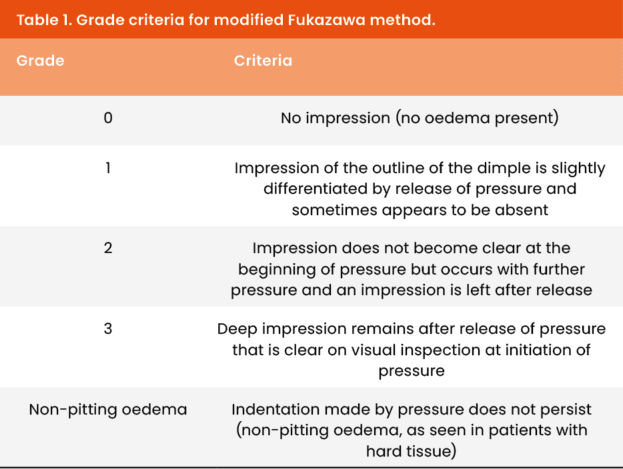
A standardised model of assessment of presence of oedema was used, the modified Fukazawa method [Table 1] (Moffatt et al, 2018), which has been shown to have a high inter-rater reliability score (Dai et al, 2015). For each resident the presence of oedema was assessed at the dorsum of the foot and the medial and lateral aspects of each gaiter region (just above the level of the malleolus) bilaterally. Oedema data were reported as no oedema; category 1, 2, 3 or non-pitting oedema (NPO); or data unreported, not applicable or above the knee amputation [Table 1].
It was also recorded if the patient had any lower-limb wounds, using the definition in line with recommendations in the National Wound Care Strategy Programme (NWCSP, 2023):
Leg wound: Any area of discontinuity of epidermis and dermis on the lower leg, level of knee to ankle.
Foot wound: Any area of discontinuity of epidermis and dermis on the foot, from ankle to toes [Figure 1].
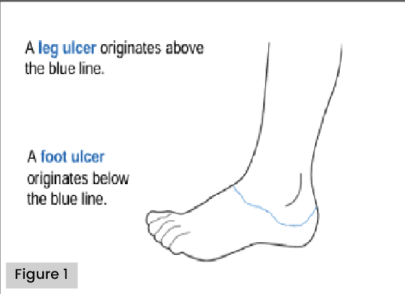
Figure 1. Definition of lower limb ulceration (NWCSP, 2023)
The location of the wound was documented either by direct observation of the wound or by looking at the location of the dressings/bandage; if the bandage covered the whole of the lower limb, the care home staff at the home were asked to confirm the location of the wound.
Details of any compression therapy in current use (e.g. compression wraps, compression stockings, compression bandages) were recorded to assess whether patient management was aligned with chronic oedema clinical guidelines. (Webb et al, 2022; Collier et al, 2025). The following categories were used: compression stockings, compression wrap garments, compression bandaging, Tubigip or none.
Data analysis
Data were analysed descriptively to determine oedema prevalence (by category and laterality status), LLU prevalence (by location and laterality status) and compression treatment (by oedema and LLU status).
Results
Data were collected from 20 residential homes with a total of 681 residents within the Wakefield District Health and Care Partnership footprint on a single day in July 2025. The number of residents in the homes ranged from 4 to 64.
A total of 601 residents were available for screening on the date of the visit. Information was obtained from 591 residents who were included in the analysis (98.3% positive response rate). Hence, the average number of participants per residential home was 29.6. Reasons for non-collection of data included: resident opted out; participant away from home; participant receiving end-of-life care; participant sleeping and care home staff requested they remain undisturbed; advanced dementia; double above-knee amputation. A very small proportion of demographic data was missing or invalid. Participant demographic data are summarised in Table 2.
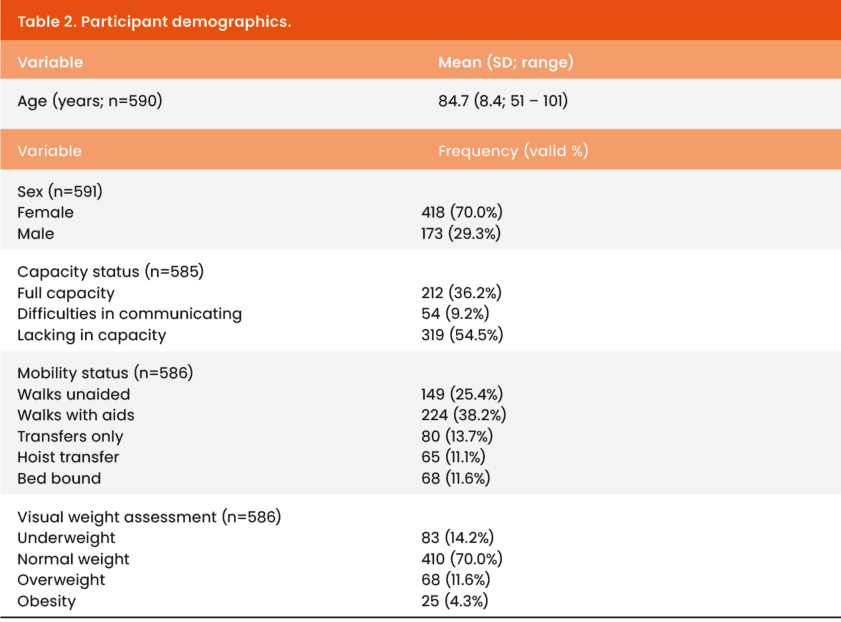
Most participants were female; with about three quarters aged 80 years or over (441 participants; 74.6%) and about one third aged 90 years or over (189 participants; 32.0%). While most participants were reported to be lacking in capacity, a majority could walk with or without aids and were of normal weight.
Oedema
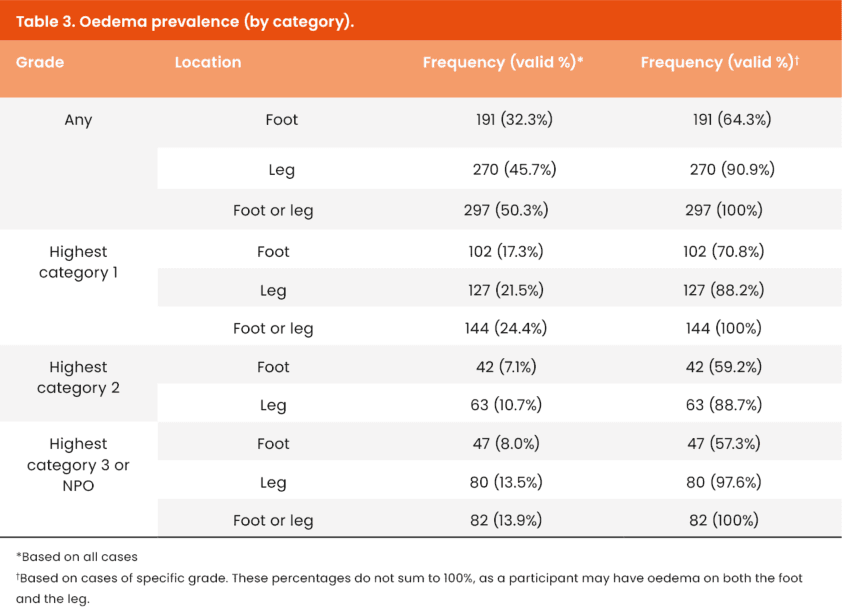
Table 3 presents summary oedema data by category. In this table, either bilaterial or unilateral cases count as a positive assessment; and oedema on the leg may be either medial gaiter or lateral gaiter. Hence, about half the measured participants had some grade of oedema in either the foot, leg or both foot and leg. Of those participants with oedema, about half of them were designated category 1; and about half were designated to be categories of greater severity (2, 3 or NPO). There were more leg oedemas than foot oedemas recorded in all categories, especially the higher categories. Table 4 presents summary oedema data by laterality status, considering any grade of oedema.
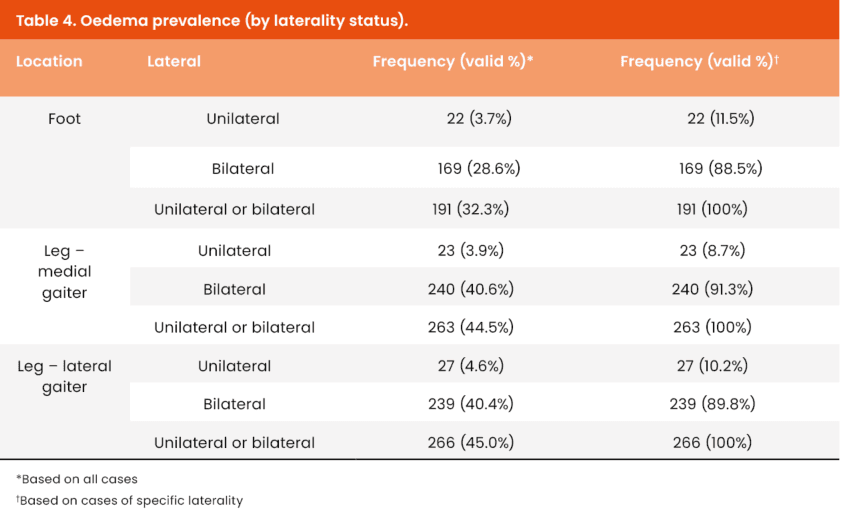
The prevalence of medial gaiter oedema and lateral gaiter oedema was about the same, at just under half of all measured participants. About 90% of cases of oedemas on the foot, medial gaiter and lateral gaiter comprised bilateral oedemas.
Lower leg wounds
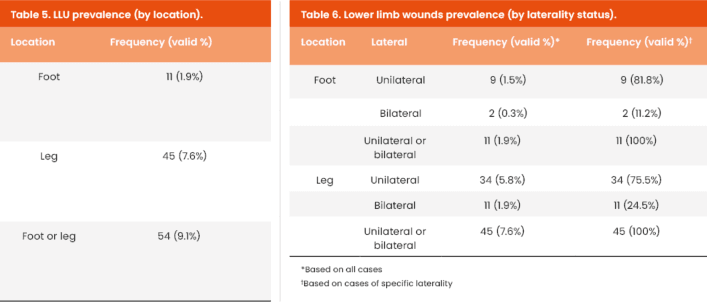
The number of participants with two or more lower-limb wounds was negligible. Analysis was based on lower-limb wounds prevalence, considering a positive case as one with one or more wound. The absence of a positive recording of lower limb wounds was treated as a negative recording.
Table 5 presents lower leg wound by location and Table 6 presents lower leg wounds on the foot or leg by laterality status.
Compression treatment
Table 7 presents compression treatment by oedema status. Three of the 297 participants with oedema were treated with compression wraps or stockings (1.01%). Almost all the participants with oedema received no compression.
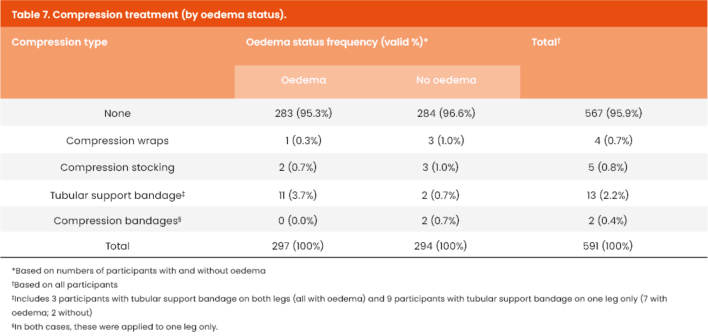
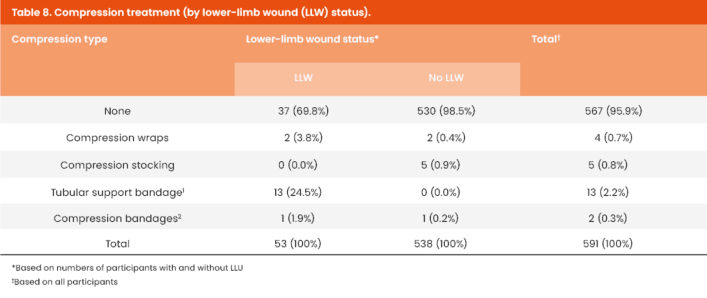
Table 8 presents compression treatment by LLU status. Of the 53 participants with lower limb ulceration, three were treated with compression wraps or bandages (5.67%). About two thirds of the participants with lower limb ulceration received no compression, and about a quarter received Tubular support bandage. Almost all participants with no LLW received no compression.
Discussion
This point-prevalence study provides one of the most comprehensive contemporary assessments of lower-limb oedema and ulceration within UK nursing and residential care homes. The findings demonstrate a substantial but largely unrecognised burden of lower-limb disease: half of all residents (50.3%) had oedema, and 9.1% had lower-limb ulceration, closely aligning with international data suggesting that institutionalised older adults are at particularly high risk of chronic oedema (O’Connor et al, 2025). These results reinforce that lower-limb swelling and wounds are not rare complications but are core components of frailty and multimorbidity in care-home populations. However, unlike conditions such as diabetes or pressure damage, systematic surveillance, pathways, and skilled intervention for oedema are notably absent.
A striking and concerning finding is the near-complete absence of evidence-based compression therapy. Only 1.01% of residents with oedema and 5.67% of those with lower-limb wounds received compression therapy, despite compression being the cornerstone of oedema control and leg ulceration management (Badger et al, 2004; De Moraes Silva et al, 2024). Although this study did not assess the individual clinical suitability of each resident for compression therapy, such markedly low utilisation suggests a substantial missed opportunity and points to a potential system-wide treatment gap. This finding aligns with clinicians’ anecdotal experience, in which oedema in care-home residents is infrequently assessed, seldom escalated and rarely managed in a proactive or preventative manner.
The distribution and severity of oedema observed in this cohort are clinically significant. Approximately half of affected residents had moderate-to-severe or non-pitting oedema, patterns consistent with chronic lymphatic failure and longstanding venous hypertension. Bilateral involvement was dominant across categories, with the oedema being more frequently found on the foot, emphasising systemic and mobility-related drivers, such as frailty, dependency, and limited calf-muscle pump function, factors especially prevalent in care-home populations (Imaginário et al, 2020; O’Connor et al, 2025).
The proportion of residents with ulceration (9.1%) exceeded that reported in general community prevalence studies (Hall et al, 2014; Gray et al, 2018), reflecting the heightened vulnerability of care-home populations. Although the aetiology of ulceration was not determined within this audit, oedema was a contributing factor in many cases. Irrespective of underlying cause, the extremely low use of compression therapy raises concerns regarding potential gaps in holistic lower-limb assessment, diagnostic accuracy, and clinician awareness of the role of compression in managing oedema-associated ulceration in this setting.
Collectively, these findings highlight an urgent need for further research to better understand barriers to proactive and preventative care within care home populations and to identify strategies to optimise management. Proactive intervention is particularly critical in this group given the high proportion of residents with reduced capacity, who depend on clinicians and carers to recognise deterioration, initiate assessment, and act in their best interests.
More broadly, the study contributes essential epidemiological evidence to support national research and service improvement initiatives. Chronic oedema remains largely invisible within NHS datasets, and care home residents continue to be under-represented in community wound-care research. This audit, therefore, provides a robust baseline from which future intervention studies, pathway redesign and training programmes can be developed. The exceptionally low utilisation of compression therapy identifies a clear and measurable target for quality improvement.
In summary, this study demonstrates a substantial burden of oedema and ulceration in UK care homes and exposes a critical gap between evidence-based recommendations and current practice. Addressing this gap through proactive assessment, earlier intervention and improved access to appropriate compression therapy represents a significant opportunity to reduce morbidity, enhance quality of life and promote more equitable lower-limb care for this vulnerable population.
Strengths and limitations
This audit comprised a large sample size (519 residents) and a very high response rate (98.3%) across 20 care homes, giving confidence in the precision of results. Although a large number of homes were represented, the sample was drawn from a single Integrated Care System. Consequently, prevalence estimates may not fully represent care-home populations in other regions with different demographics, staffing models or approaches to lower-limb care.
The point-prevalence design provides a snapshot of oedema at a single time point. It cannot determine disease duration, fluctuations in swelling or temporal relationships between oedema and treatment. Residents who were temporarily away from the care home or receiving end-of-life care were not assessed, which may have introduced minor selection bias if these individuals had different lower-limb health profiles. However, there is no evidence for any systematic differences between residents who were present at the time of auditing and those who were absent; and any effects of absentees are expected to be negligible due to the high proportion of residents who were successfully audited.
Data collection relied on trained NHS nurses performing bedside clinical observations, which enhances reliability but may still introduce inter-observer variability, particularly in grading oedema severity or interpreting ambiguous wound descriptions. The modified Fukazawa method is pragmatic for large-scale screening but cannot distinguish underlying vascular or lymphatic aetiology, limiting the ability to comment on pathophysiological drivers of oedema and ulceration within this cohort.
Despite these limitations, the dataset provides robust, much-needed epidemiological evidence on the scale of unmet need in care-home residents and highlights a critical gap in prevention and treatment that warrants further investigation and service improvement.
Conclusion
This point-prevalence study provides robust contemporary evidence of a substantial and under-recognised burden of lower-limb oedema and ulceration among residents of UK nursing and residential care homes. Half of all residents assessed had oedema, and almost one in ten had ulceration, yet the use of evidence-based compression therapy was exceptionally low. These findings highlight a critical gap between known best practice and the care currently delivered to one of the most vulnerable populations.
Improving outcomes for care-home residents will require a system-level shift towards proactive lower-limb assessment, earlier recognition of oedema and timely initiation of compression therapy. Strengthening staff training, embedding simple screening tools into routine care and establishing clear referral and treatment pathways may help prevent avoidable deterioration, reduce episodes of cellulitis, and minimise the development or recurrence of ulceration.
This study provides essential epidemiological insight to inform future research, service redesign, and quality-improvement programmes. By prioritising lower-limb health in care homes, there is significant potential to enhance quality of life, reduce healthcare utilisation and deliver more equitable, evidence-based care for older adults.